One Phone Call Changed Everything
Love, Pain, and a Question Every Parent Must Face
It was an ordinary afternoon. Traffic moved as usual, people were busy with their routines, and life seemed to flow uninterrupted. But one phone call to the Mukti Vahini Helpline shattered that normalcy and changed the course of several lives.
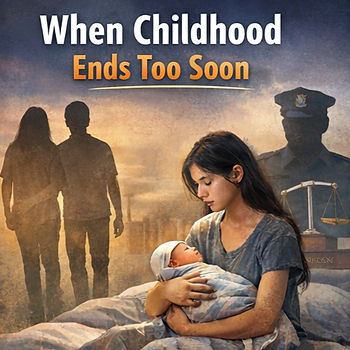
The call came from a police station. The words were urgent and unsettling: A 25-year-old man had arrived with a 17-year-old minor girl. She was pregnant, her condition was critical, and immediate support was required.
In that single moment, a silent struggle began
Without wasting a second, the our team rushed to the spot. The ambulance siren cut through the city streets—carrying fear, urgency, and the pain of a child fighting for her life. At the district government hospital, the girl lay trembling in severe pain. Her blood pressure was dangerously high, her breathing unstable, and her body exhausted. Through the pain, one word escaped her lips again and again: “Mother…”
But her mother wasn’t there. Her father wasn’t there. There was no comfort of home, no familiar face, no sense of safety.
She was alone—lost in fear, pain, and uncertainty
A team member sat beside her and gently held her hand. It was cold, soaked with sweat, yet desperate for reassurance. “Don’t be afraid,” she whispered softly. “I’m here. I’m with you.” There was no medicine in those words, but there was humanity—and that was enough to spark a faint hope in the girl’s eyes.
The doctors were tense. The nurses anxious. The situation was fragile. “A caesarean might be required,” the doctors said, “but we will try for a normal delivery if she can manage.” What followed was not just a medical effort, but a test of courage—of a child enduring unimaginable pain and of a woman standing firmly beside her.
During labour, the girl cried out in agony. At times she lost consciousness, at times she called out for her mother. Through every contraction, the team member kept repeating one sentence into her ear: “You are strong. You can do this. I am here with you.”
Clinging to those words, the girl survived the ordeal. Finally, the cry of a newborn filled the room. Against all odds, a normal delivery was successful. Two lives were saved. But as relief set in, a painful question emerged: How did it come to this?
Outside the ward, the young man shared his story. With a trembling voice, he said they were from the same village and had been in a relationship for three years. Their communities were different, marriage felt impossible, and they believed running away would solve everything. “I thought I would give her happiness,” he said. Then his voice broke. “But I ended up giving her the greatest pain.”
This story is not about one girl or one boy. It reflects a larger social reality. Today, many young people confuse love with dreams while forgetting responsibility. They overlook age, law, and consequences. One of the biggest reasons behind this is the growing communication gap between parents and children.
Discipline is important in childhood, but during adolescence, friendship becomes essential. Between the ages of 12 and 18, children don’t just need parents—they need understanding companions. Someone they can talk to openly. Someone they can approach even when they make mistakes. But too often, mistakes are met with anger, punishment, and shame. As a result, children run away.
When they do, they often turn to peers who lack awareness of the law, life, and consequences. And one day, families find themselves standing in police stations and hospitals—when it is already too late.
In this case, the girl survived. But the young man’s life is now bound by the law. The law is clear: any relationship with a girl below 18 years of age—regardless of consent—is a crime under the POCSO Act. Many young people, driven by emotion and ignorance, end up facing lifelong consequences.
This is not written merely to narrate an incident. It is a mirror—for parents, for society, and for young people.
Parents must ask themselves: Are we friends to our children?
Society must reflect: Are we guiding our youth in the right direction?
And young people must pause and think: Are we living in reality, or just chasing dreams?
In the end, the message is simple yet powerful: Give children love—but also direction. Give them freedom—but also guidance. Be parents—but also be friends.
And if you ever feel stuck, scared, or helpless—do not hesitate to seek help.
Snehalaya Udaan – Mukti Vahini Helpline stands firmly for the protection, rights, and brighter future of every child.
If we become aware today, we can save tomorrow’s generation. And only a protected generation can truly build the nation.