top of page


Stalking is a pattern of fixated, obsessive, unwanted, and repeated behaviour—occurring at least twice—that causes the victim to feel alarmed, distressed, or in fear of violence.
India's first state-level workshop on stalking
Hosted by National Commission for Women and Snehalaya, Ahilyanagar, 14 & 15 February 2026
"A girl who can speak freely with her family is less likely to be victimised"
Vijaya Rahatkar, Chair, NCW
Stalking is a criminal offence under Section 78 of the Bharatiya Nyanya Sanhita (BNS) Act.
In the backdrop of the increasing incidents of stalking of women and girls, a state-level workshop was organised to raise awareness of stalking as a criminal offence and to share best practice with stakeholders who can bring perpetrators to justice and offer support to victims.
Inaugurated by the Chair of the National Commission for Women, Hon. Vijaya Rahatkar, the two-day workshop saw national and international professionals and experts in criminal law, police, NGOs, psychologists and the media discussing ways forward. Five panel discussions over the two days addressed range of topics creating a roadmap to improve the situation for those being stalked at national level. Discussions included:
-
Stalking as a crime in India
-
Role of social sector in stalking cases
-
Cyberstalking
-
Psychology of stalkers and victims
-
International perspectives
-
Portrayal of stalking in the media
Among the guest speakers was Snehalaya UK Trustee, Caroline Hornsby, who has over 20 years of experience working to support survivors of gender-based violence with a specialisation in stalking, which has seen her directly support 100s of victims through the UK courts.
India’s National Crime Records Bureau (NCRB) data shows that 10,495 stalking cases were registered in the country, translating into a rate of 1.6 per lakh population with Telangana registering the highest number of cases followed by Maharashtra, Andhra Pradesh, Haryana and Himachal Pradesh. In absolute numbers, Maharashtra tops with 2,689 stalking cases.
Stalking can be identified through FOUR characteristics.

-
Fixated - an obsessive attachment to someone
-
Obsessive - thinking too much/spending too much time on thinking about one person which is not reasonable or normal
-
Unwanted - the victim has told the stalker to stop and clearly does not want contact with the stalker
-
Repetitive - a course of conduct of at least two incidents. For example turning up at the victims home or place or work, sending repeated messages.
Currently Indian law recognizes the stalking of women as a crime, however there is no provision for men being stalked. It is also a bailable crime for the first offence, leaving victims open to further risks.
The workshop clarified what stalking is, with real-life examples and the sharing of important tools to identify stalking, which is separate to harassment, and ways to collect evidence that will help secure convictions. We also shared our Snehadhar 24/7 national helpline (9011363600) for those experiencing stalking to access support, including:
-
Listening to victims concerns
-
Risk assessing cases
-
Advising on safety options
-
Helping victims to gather evidence
-
Being the victim’s voice in the system
The outcomes which we were aiming for through the workshop are:
• Raise the profile of stalking - educate stakeholders and improve recognition and enforce the legal processes
• Create a roadmap and support systems to tackle stalking
• Publish a paper on the conference with a knowledge partner
• Launch Snehadhar helpline as the national helpline for stalking support
• Launch a national stalking awareness day preferably 14th Feb
• Presenting the conclusions of this workshop to the relevant departments/ministry of the Central Government.
Speaking at the launch, Vijaya Rahatkar said that providing safety and respect to girls and women is the responsibility of family and society along with the police. Girls should be able to raise their voices; Otherwise, incidents of harassment and stalking that initially seem minor can turn serious.
She added that teasing girls and following them against their will is a very serious matter. Girls should share the situation with their parents about it and in turn parents should take these matters seriously and not victim blame.Without support of their family and friends, victims are afraid to leave their house and become lonely and suffer psychologically, suffer from mental illness.
Our Founder, Dr Girish Kulkarni then called for Valentine's Day to be marked as Anti-Stalking Day, which Vijaya Rahatkar fully supported.


Follow our workshop
#Stalkingiscrime
#Stalkingisnotlove
#Stalkingawareness
#Endstalking
#Nationalstalkingawarenessday
#youarenotalone


media center


VIDEO HIGHLIGHTS
Stalking
Stalking
Search video...
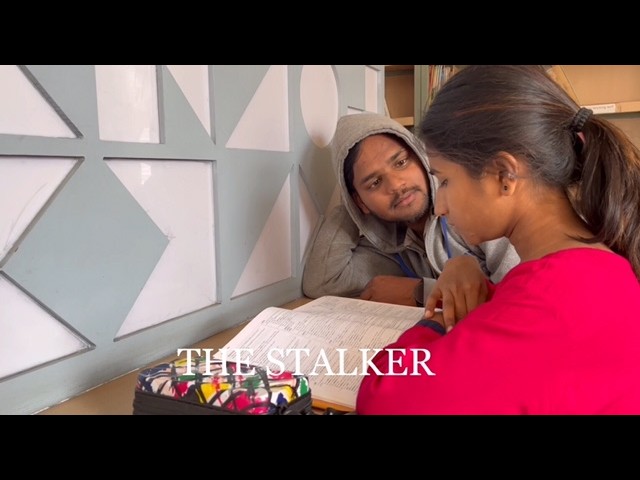
The Stalker
03:02

WhatsApp Video 2026-02-14 at 7.08.42 PM
00:57

“पीछा करने वाला”
03:03
Snehalaya is a voluntary organisation registered in 1992 under the Societies Registration Act 1960 (Reg No MH2220/A'nagar) and in 1995 under the Foreign Contribution Regulation Act (FCRA) Reg No 083720087. It has Tax Exemption Recognition under Section 80G of the Income Tax Act 1961 No.CIT(E)/12A(a)/80G/135/2008-09/1916)
Snehalaya adheres to the norms prescribed for good governance of voluntary organisations and is certified by Credibility Alliance (CA/82/2013)
Snehalaya, Home of Love Project and Snehalaya UK are all trading names for operations in India and beyond that all represent our projects and services operating since 1989 in Ahmednagar, Maharashtra - India.
All donations given to any part of our organisation, unless directly specified, will be spent where most needed for the betterment of our beneficiaries in project running costs and in building capacity through organisational development.
Company Registration documents:
Indian Charity Registration details
UK Charity Registration Number: 1157926
Snehalaya Americas, Inc. is a registered 501 c(3) entity, at the following registered address: 30 Sheryl Drive, Edison NJ 08820-1311
© Images copyright of Snehalaya
bottom of page